
English| EUR
Suggested for you
More currencies
Choose a language
Fushimi Inari-taisha operates without closing hours, but the experience you encounter depends entirely on when you arrive. The main shrine grounds, torii tunnel entrances, and mountain summit trails remain accessible around the clock, though natural light, artificial illumination, and crowd density shift dramatically between dawn, midday, and late evening.
Quick answer
Fushimi Inari-taisha is open 24 hours a day, seven days a week, with no closing time or gate lockout. The shrine grounds and the full network of vermillion torii gates remain accessible throughout the night, though artificial lighting is limited to the lower shrine precincts and the first few hundred meters of the torii paths. Visitors walking the upper mountain trails after sunset rely on personal flashlights or moonlight.
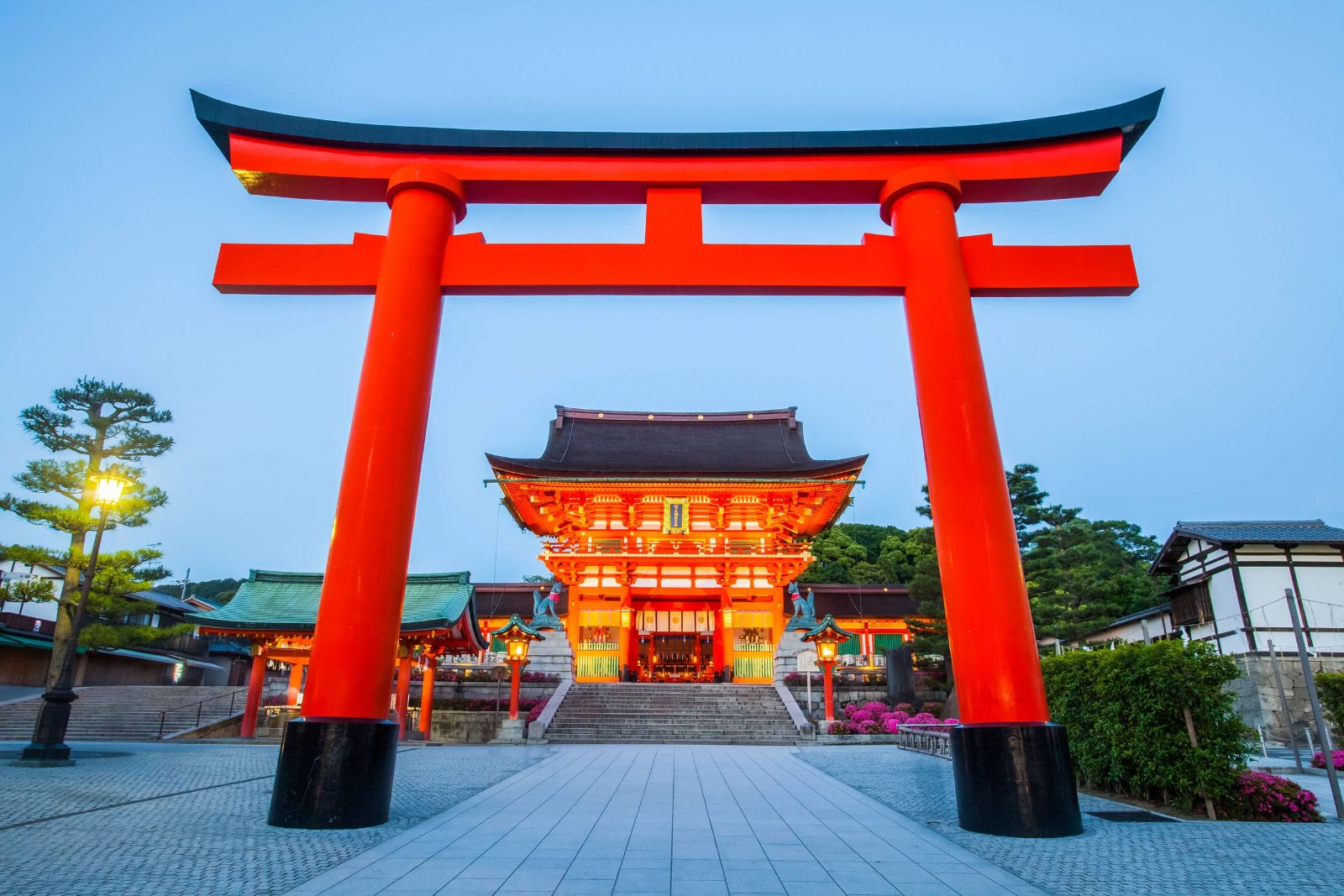
Fushimi Inari-taisha is one of the few major Kyoto shrines that never closes its gates. The 24-hour access policy stems from the shrine's mountain setting and its role as an active place of worship rather than a ticketed monument. Devotees ascend the torii paths at all hours, and the shrine administration has maintained unrestricted entry since long before tourism became a defining feature of the site. Understanding fushimi inari hours means recognizing that "open" does not mean "evenly lit" or "equally safe." The main worship hall and the initial torii tunnel receive artificial illumination from dusk until around 10:00 PM, casting the vermillion gates in a warm glow that attracts evening photographers. Beyond the first set of switch-back paths, the lighting infrastructure thins rapidly. The mountain trails above Yotsutsuji intersection remain unlit, and the final kilometers to the summit are navigable only by those carrying their own light sources. Seasonal variation in natural light also matters: summer visitors can walk the full circuit in daylight as late as 7:00 PM, while winter sunset arrives before 5:00 PM, compressing the safe walking window. Crowd patterns follow a predictable rhythm. Tour groups and independent travelers converge between 10:00 AM and 3:00 PM, creating bottlenecks at the lower torii gates and the stone fox statues near the main hall. Early morning arrivals—those who reach the base by 6:30 AM—often have the lower paths to themselves, and the air temperature remains cool enough for the full two-hour summit hike. Late-night visits after 9:00 PM offer solitude and dramatic lighting near the main precincts, but the upper mountain becomes genuinely isolated, with stretches where you may walk for twenty minutes without encountering another person. The absence of entrance fees and gate staff means no one monitors your arrival or departure time. This freedom carries responsibility: mobile phone signal weakens on the upper slopes, vending machines and rest facilities cluster near the base, and the stone steps grow slick after rain. The shrine's 24-hour access policy assumes visitors will judge their own capability and prepare accordingly. Those planning a night ascent should carry a headlamp, offline maps, and enough water for the full circuit, because the infrastructure that supports daytime crowds does not extend into the mountain's unlit sections.
“The 24-hour access policy assumes visitors will judge their own capability and prepare accordingly.”
Fushimi Inari-taisha Shrine grounds remain accessible to visitors twenty-four hours a day, seven days a week. There are no gates or barriers preventing entry at night, allowing for exploration outside of standard daytime hours.
The best arrival window is 06:00–09:00, as this early timeframe allows visitors to experience the vermilion torii gates before the arrival of peak mid-morning crowds. While the shrine is accessible at all hours, arriving during this window offers the most serene environment.
—
Arrive between 06:00 and 09:00 to avoid heavy foot traffic. Walking the mountain paths early provides a quiet atmosphere before tour groups congregate.
Cooler temperatures
The shrine remains open after dark, offering a different perspective for those comfortable with night hiking. Mid-week nights are generally the least crowded periods.
Mild 15°C–22°C
These peak seasons see increased visitor numbers, making early arrival critical. Pleasant weather encourages longer hikes up the mountain trails.
Verdict: The optimal time to visit for fewer crowds is between 06:00 and 09:00 on a weekday during the months of April or October.
Night visits expose planning gaps that daylight hides. Most issues stem from underestimating trail darkness and overestimating personal stamina after sunset.
Attempting the upper trail network after dark without a headlamp
The shrine provides no lighting beyond the lower precincts. Carry a headlamp or quality phone light, and download an offline map before you lose signal past the first thousand gates.
Assuming all 10,000 gates are lit throughout the evening
Only the main approach and inner shrine remain illuminated after dusk. The summit trail and side paths sit in complete darkness—plan your turnaround before twilight fades.
Wearing sandals or smooth-soled shoes for a night hike
The stone steps become slippery after rain and harder to judge in low light. Wear closed-toe shoes with grip, especially if you intend to climb past the halfway pavilion.
Starting a summit attempt within two hours of sunset
The round trip from base to peak takes 2-3 hours at a steady pace. Begin your ascent no later than mid-afternoon if you want to descend in daylight, or accept that the return will be entirely unlit.
Fushimi Inari-taisha is located in southern Kyoto, directly adjacent to major rail lines that operate late into the evening. Accessing the main entrance is straightforward via public transit, making it a viable destination for those planning visits during the night.
JR Nara Line to Inari Station
Keihan Main Line to Fushimi-inari Station
Direct to 68 Fukakusa Yabunouchicho
The JR Nara Line station is located immediately outside the main gate, providing the most direct access. While local parking is limited, the proximity of these stations ensures reliable transport for visitors arriving or departing at late hours.
Fushimi Inari-taisha maintains an open-access policy for all visitors. No tickets or reservations are required to enter the shrine grounds or hike the mountain trails.
Verdict: Adults pay 0 JPY for entry, as there are no ticketed areas within the shrine complex.
Everything you need to know about fushimi inari hours
The shrine remains open 24 hours a day, seven days a week, allowing visitors to explore at any time. These fushimi inari hours ensure that the sacred grounds are accessible to everyone, regardless of their schedule.
There is no cost to enter the shrine, as the entrance fee is 0 JPY for all visitors. This policy of free entry for all visitors applies regardless of the time of day or night.
The best arrival window is between 06:00 and 09:00 to avoid the heaviest peak crowds. Planning your trip within these fushimi inari hours allows for a more peaceful experience along the mountain trails.
Yes, the paths through the thousands of torii gates remain accessible during the night. While there is no official lighting schedule, many sections are open for those interested in a night tour of the Kyoto landmark.
Because the site is open 00:00–23:59 daily, you are welcome to walk the trails after sunset. Many travelers appreciate the quiet atmosphere during these late fushimi inari hours, though visitors should remain mindful of trail safety and terrain.
The shrine is located at 68 Fukakusa Yabunouchicho, Fushimi-ku, Kyoto 612-0882, Japan. You can reach the administration by phone at +81-075-641-7331 for specific inquiries.