2 hr
Fushimi-Inari Shrine Evening Walk
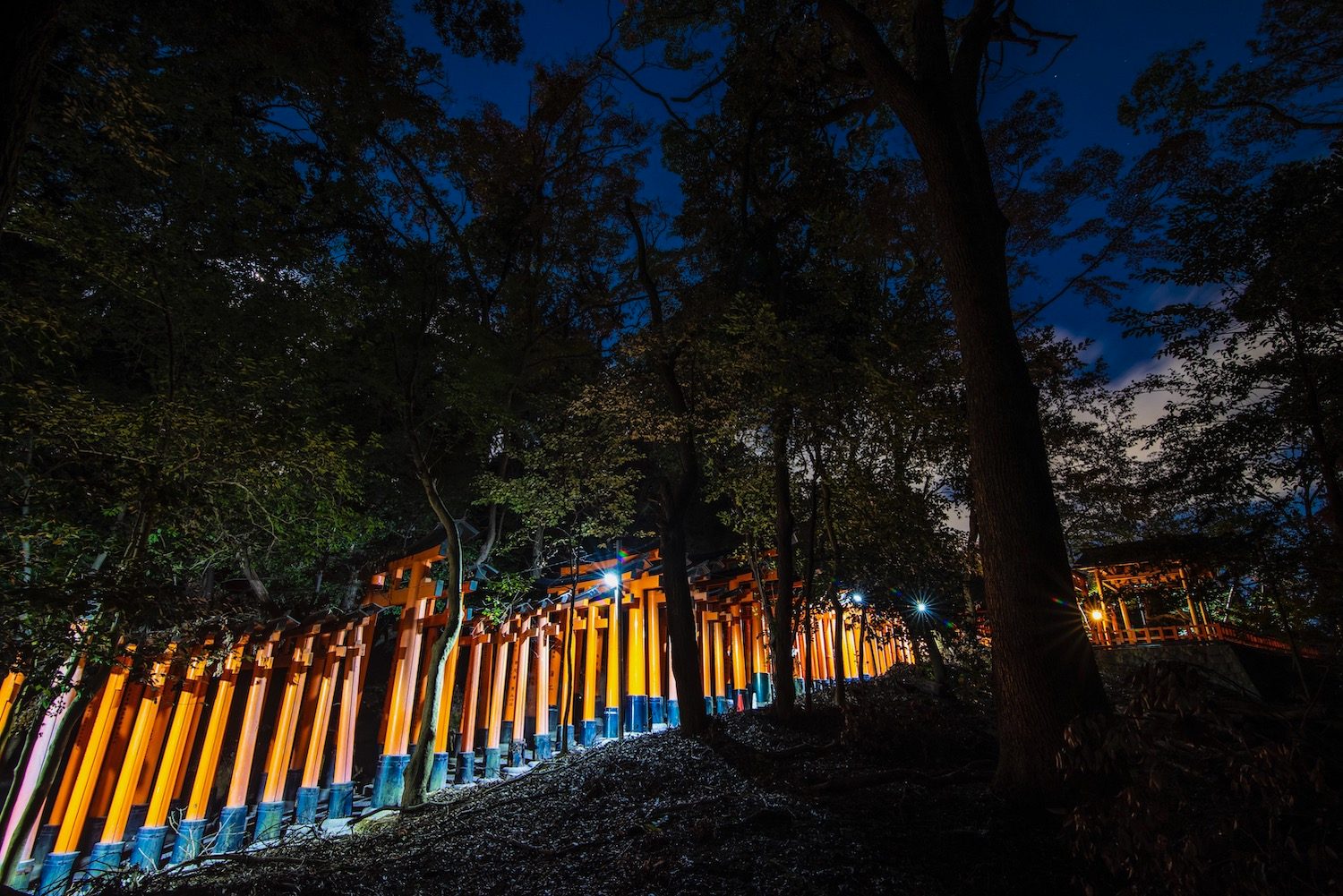
Discover Kyoto's famous thousand-gate shrine after dark, lit by lanterns and free from daytime crowds.
Reserve
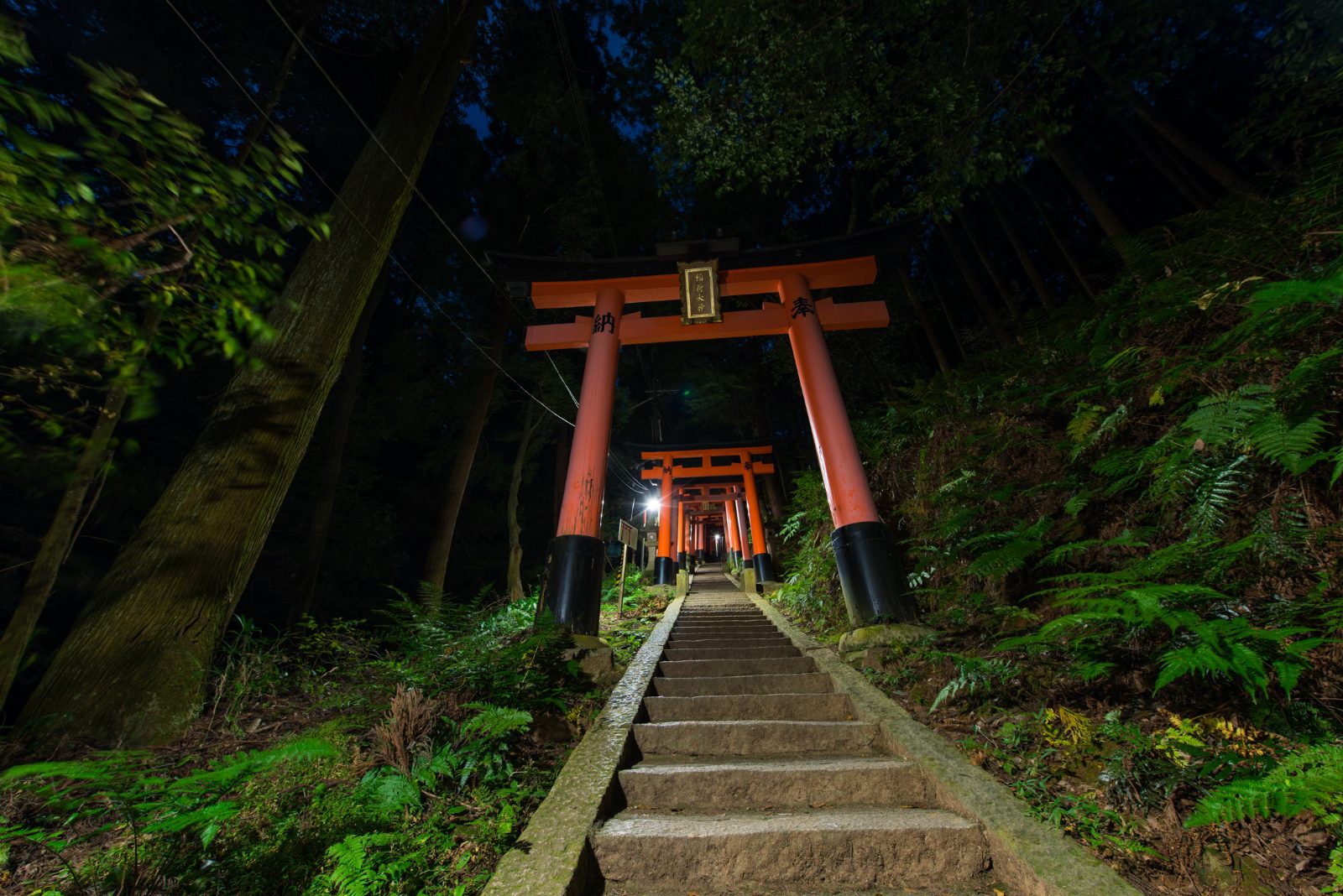
Ten thousand vermilion gates ascending into darkness, where foxes guard the mountain and lanterns flicker above stone steps.
Hand-picked by our editors – only the best 8 night experiences from 24 reviewed.
Verified partners for Fushimi Inari Night tours, free cancellation where available, and instant confirmation on every booking.
2 hr
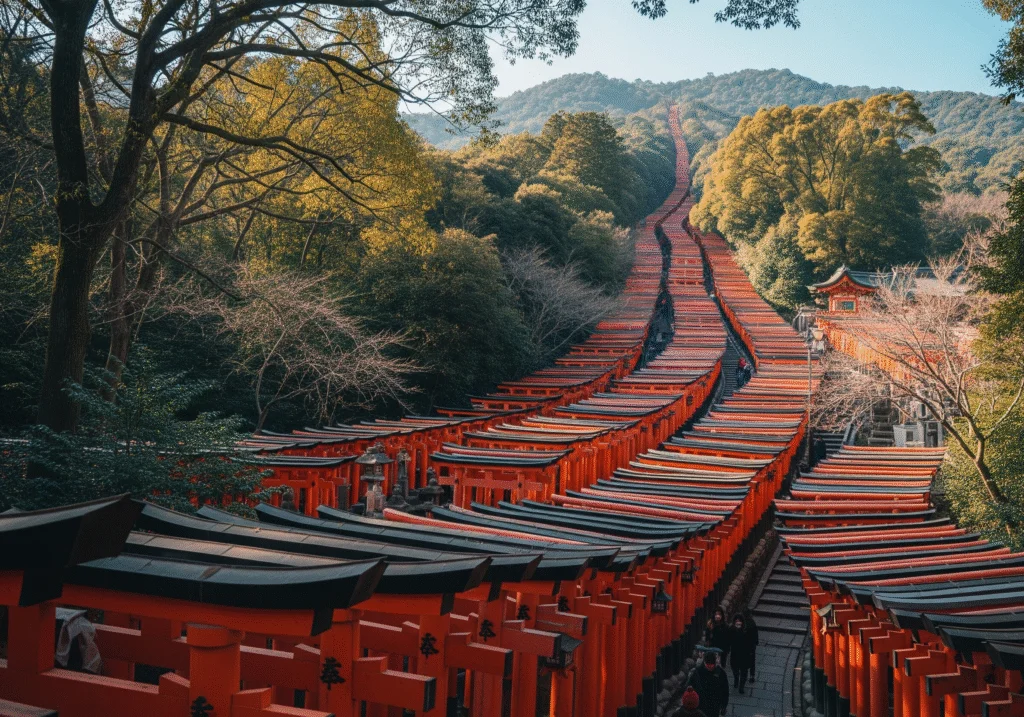
Discover Kyoto's famous thousand-gate shrine after dark, lit by lanterns and free from daytime crowds.
Reserve
2 hr
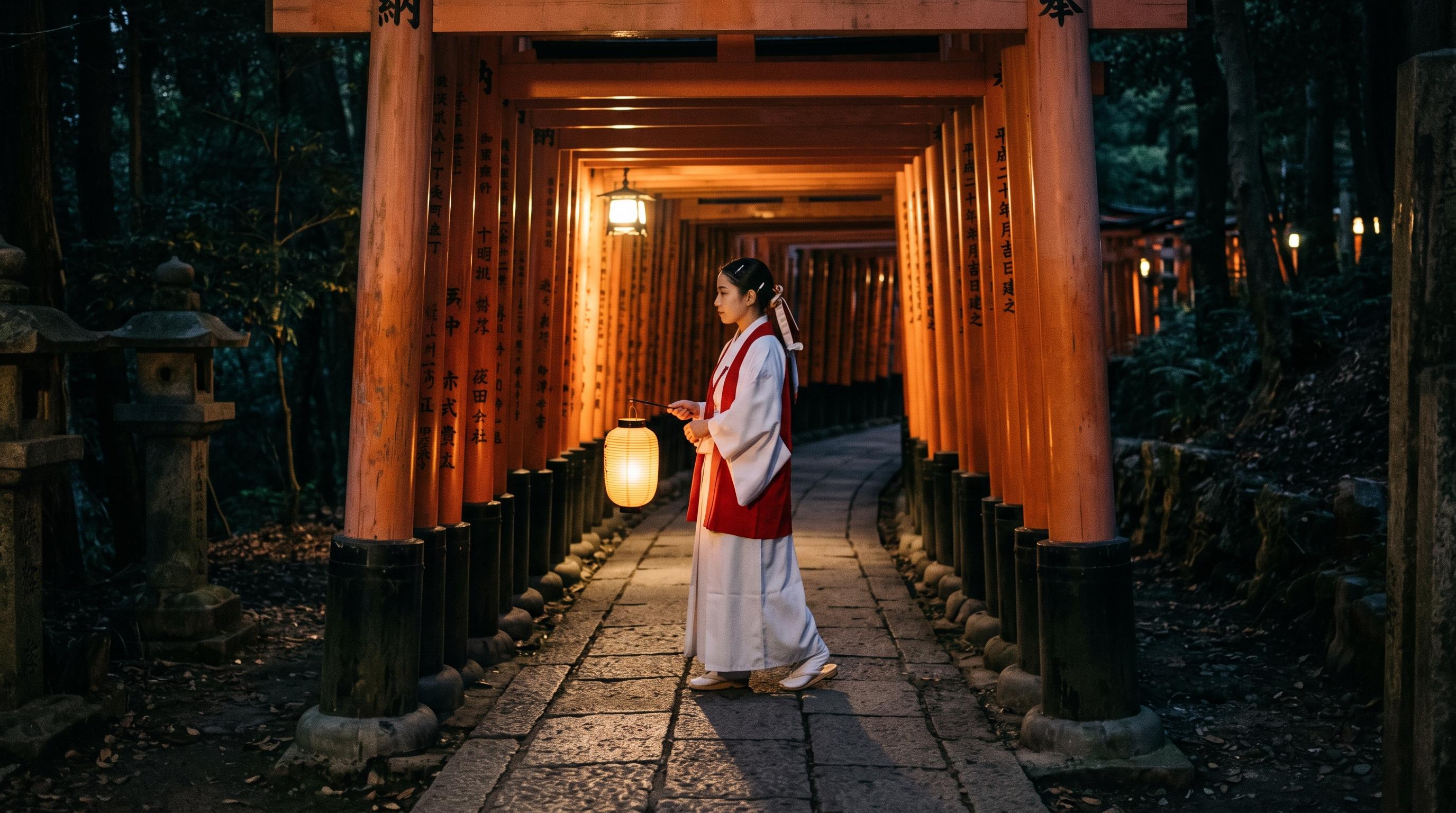
Explore Kyoto's vermilion gates after dark with a trained guide who brings shrine culture to life
Reserve
2 hr 30 min
Trek secret mountain trails beyond the famous torii gates with a local guide at dusk
ReservePrices from verified partners. Availability updates in real time at checkout. Free cancellation policies apply where shown.
Every Fushimi Inari Night tour side-by-side — duration, what's included, how you redeem.
| Experience | Duration | Rating | Guide | Small group | Free cancel. | Price | |
|---|---|---|---|---|---|---|---|
|
Standard Entry Most popular
Fushimi-Inari Shrine Evening Walk
|
2 hr | ★ 4.9 | ✓ | ✓ | ✓ | €28 | Book → |
|
Standard Entry
Fushimi Inari Night Walk with Local Guide
|
2 hr | ★ 4.9 | ✓ | ✓ | ✓ | €39 | Book → |
|
Standard Entry
Fushimi Inari Evening Forest Hike
|
2 hr 30 min | ★ 5.0 | ✓ | ✓ | ✓ | €30 | Book → |
All prices from verified partners. Availability and exact terms confirmed at checkout.
Kiyomizu-dera offers a managed, light-focused spectacle, while a self-guided fushimi inari night tour provides a quiet, introspective journey through historic vermilion gates. They complement each other; most visitors who do both call the shrine hike the more adventurous.
| Feature | Top pick Fushimi Inari | Kiyomizu-dera Illumination |
|---|---|---|
Atmosphere |
Spiritual and quiet | Managed light event |
Accessibility |
Open 24 hours daily | Seasonal evening hours |
Cost |
0 JPY (Free entry) | 400 JPY (summer entry fee) |
Crowd Density |
Low at night | High during special events |
Primary Focus |
Torii gate hiking trail | Wooden stage and temple grounds |
Nature of Experience |
Self-guided exploration | Curated architectural display |
| See tickets → |
Verdict: If you prioritize flexibility, the fushimi inari night tour tours offer freedom, whereas the Kiyomizu-dera evening experience requires specific fushimi inari night tour tickets for seasonal entry.
Choose your ticket, select your date, and reserve in under two minutes. Secure checkout handled by our verified partner.
Instant confirmation by email, with a mobile voucher you can save offline. No printing, no queuing at a collection desk.
Arrive at the entrance, show your voucher on your phone, and walk in. Most tickets include priority or skip-the-line access.
Practical details for Fushimi Inari Night tickets straight from our verified partners — hours, access, rules, and how to get there.
68 Fukakusa Yabunouchicho
Standard meeting point for most tours.
Open in Google MapsTake the JR Nara Line to Inari Station, which is a 1-minute walk from the shrine entrance.
Modest clothing is recommended when entering the sacred grounds of Fushimi Inari-taisha Shrine. Comfortable walking shoes are essential for any fushimi inari night tour due to the mountain terrain.
There are no lockers at the entrance. Keep your belongings light as you navigate the narrow stone paths during your fushimi inari night tour.
Photography is permitted throughout the grounds. For a night tour, bring a camera capable of low-light settings to capture the illuminated vermilion torii gates.
The lower portion of the shrine is accessible, but the mountain trails feature steep stairs and uneven ground. A fushimi inari night tour may be difficult for those with limited mobility once past the main gates.
Mobile phone signal is generally available throughout the lower complex. Ensure your device is fully charged before embarking on a fushimi inari night tour.
The base of the shrine is family-friendly, though the full mountain hike can be demanding for young children. Strollers are not recommended for the higher forest trails during a fushimi inari night tour.
Local food stalls are located near the main entrance. We recommend carrying water, especially if you plan an extended evening walk.
Pets are generally discouraged on the sacred mountain trails. Please keep them leashed and restricted to the main plaza if brought along.
The 05:00–08:00 window is the best time to visit if you wish to see the site after a fushimi inari night tour without daytime crowds. Respect the sanctity of the shrine at all hours.
Best time to go, insider tips, nearby landmarks, and the cancellation fine print — flip through to skim what matters to you.
How crowds, weather, and events shift across the year.
Expect humid evenings, but the forest provides some shade; a fushimi inari night tour is ideal to avoid daytime heat.
Small details that turn a good visit into a great one.
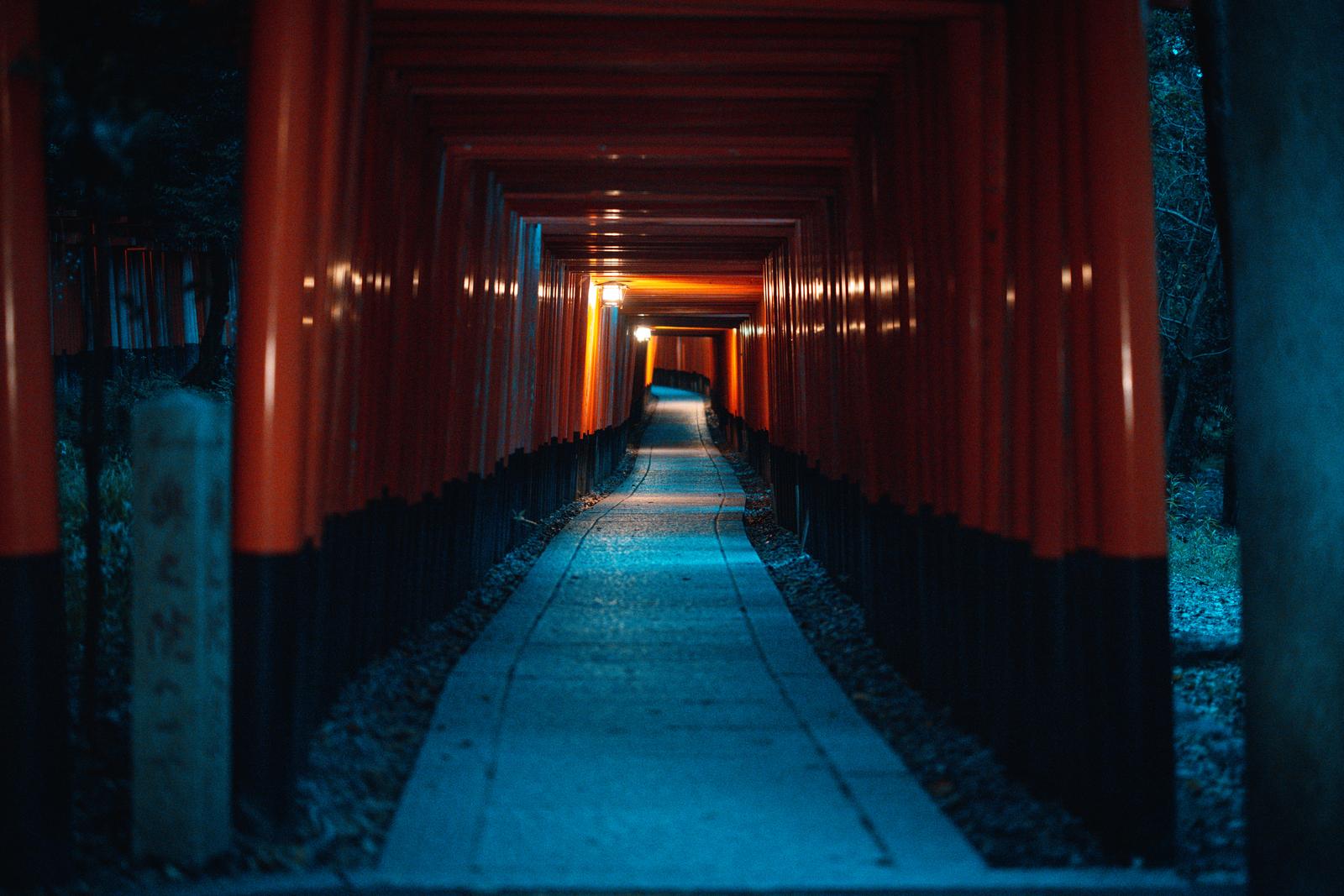
The main torii gate tunnels are well-lit at night, unlike the deeper mountain trails. Stick to these paths for safety during your fushimi inari night tour.
Non-bookable sights within a short walk — free to visit, easy to pair.
A renowned Zen temple known for its autumn colors and historic architecture.
Flexible, no hidden fees.
Since Fushimi Inari-taisha Shrine has 0 JPY (Free entry), no cancellation policy applies to the site itself. Private guides booked for a fushimi inari night tour operate under their own individual terms.
Hand-picked options within walking distance — pick a district for vibe, or a specific hotel for convenience.
Offers convenient access to the Nara Line for early morning departures.
Fushimi Inari-taisha opens its gates twenty-four hours every day, a policy unchanged since the shrine's formal establishment in 711 CE, when the Hata clan consecrated the mountain to Inari Ōkami, the kami of rice, commerce, and prosperity.
Unlike most Japanese temples and shrines that close at dusk, Fushimi Inari has never locked its pathways, allowing pilgrims and merchants to ascend the mountain at any hour to petition the fox messengers who serve the deity. This round-the-clock access was born from necessity: Edo-period traders departing Kyoto before dawn would stop to pray for safe passage, and farmers returning after nightfall would leave offerings of sake and rice.
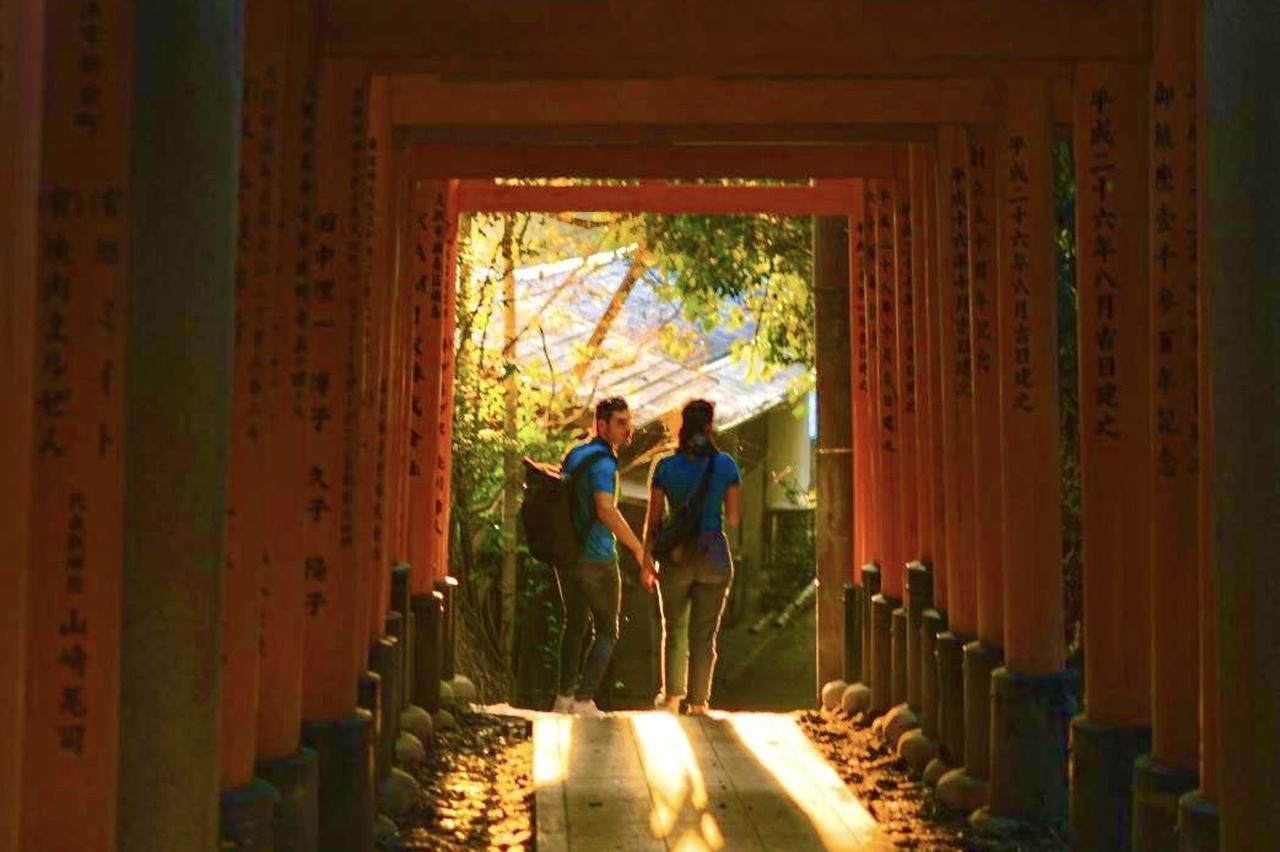
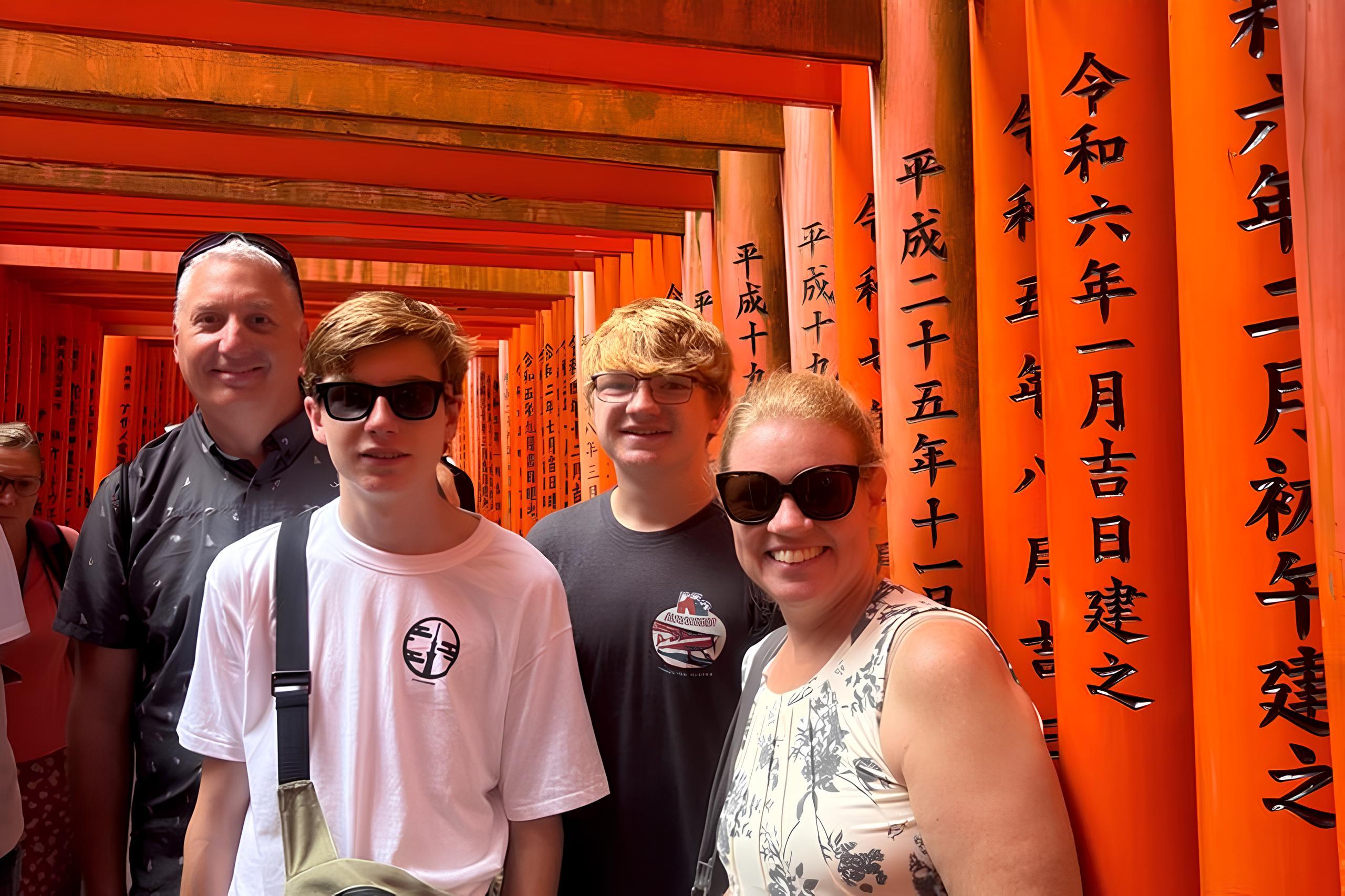
The shrine complex sprawls across Mount Inari's lower and middle slopes, encompassing dozens of sub-shrines, stone fox guardians, and an estimated ten thousand vermilion torii gates donated by individuals and corporations since the practice began in the early Meiji period. The main hall, reconstructed in 1499 after fire destroyed the original structure, stands at the base; from there, the Senbon Torii—the iconic twin corridors of densely packed gates—begins its climb. Each torii bears the donor's name and dedication date painted in black on the reverse side. The mountain trail continues for four kilometers to the summit at 233 meters, passing through groves of cryptomeria and bamboo, with stone steps worn smooth by centuries of pilgrims. At night, the pathway transforms: municipal lighting illuminates only the first third of the ascent, while the upper slopes rely on scattered lanterns and moonlight.
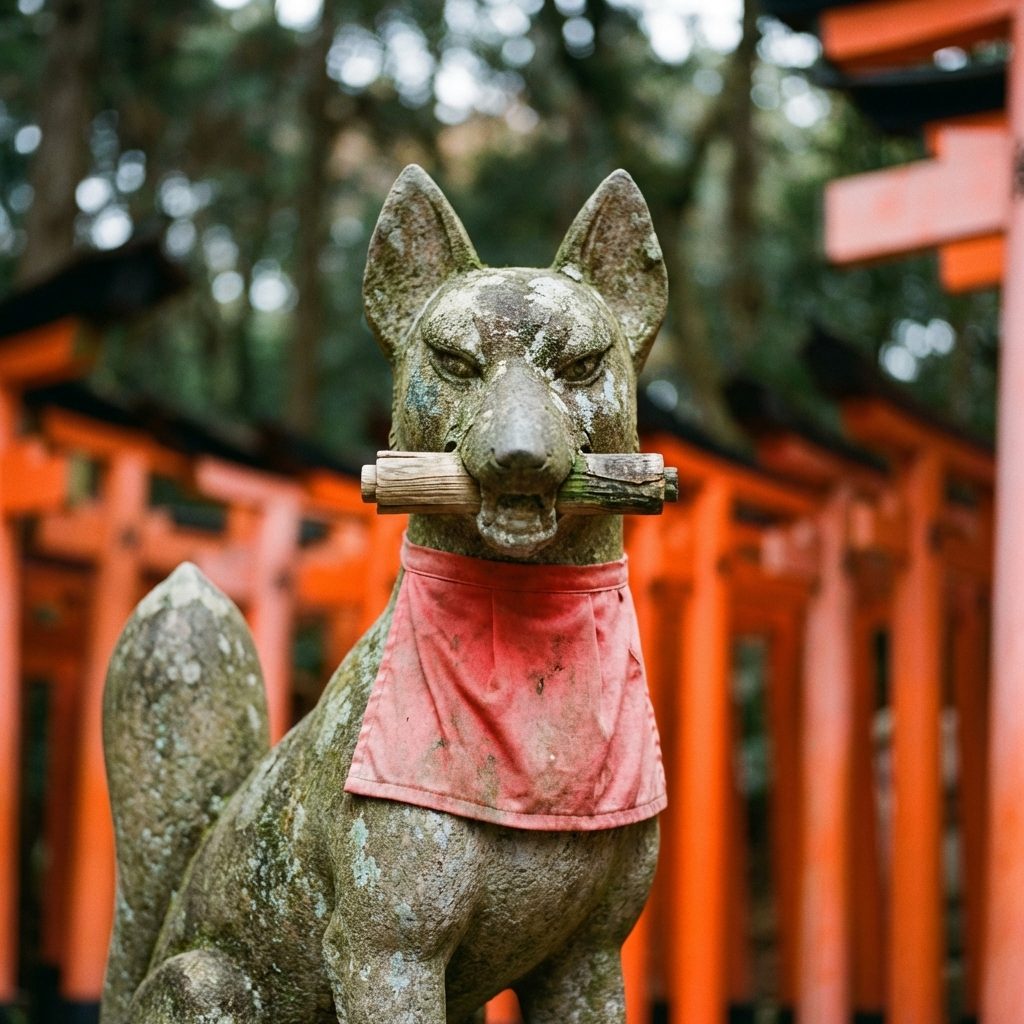
Fushimi Inari's nocturnal atmosphere has drawn writers and artists for generations. Tanizaki Jun'ichirō referenced the shrine's "shadows within shadows" in his 1933 essay In Praise of Shadows, observing how traditional architecture and vermilion lacquer interact with low light to create spatial ambiguity. The torii gates, which appear bright orange under midday sun, shift to deep rust and near-black after sunset, their wooden posts merging with the surrounding forest. Foxes—both the carved stone kitsune holding keys or jewels in their mouths and the occasional living animal—occupy a central role in Inari worship; believers consider them divine messengers capable of shapeshifting, and many visitors report heightened awareness of rustling leaves and distant movement along the darkened trails.
A Kyoto fushimi inari night walking tour typically begins at the main hall and proceeds through the lower Senbon Torii before branching toward the Yotsutsuji intersection, a plateau offering views of Kyoto's illuminated grid below. Guides trained in Shinto practices explain the ema wooden plaques shaped like fox heads, the ritual purification at temizuya basins, and the protocol for approaching sub-shrines where individual kami reside. The fewer visitors after 21:00 allow for extended stops at Kumataka-sha and other mid-slope shrines that are often crowded during daylight hours. Participants in fushimi inari night tour Japanese ghosts and urban legends experiences hear accounts of yokai sightings, including tales from the Heian period when the mountain was considered a threshold between worlds, and stories of poets who claimed to encounter fox spirits offering cryptic guidance.

"Fushimi Inari opens its gates twenty-four hours every day, a policy unchanged since 711 CE."
A step-by-step walkthrough of Fushimi Inari Night tickets — what you'll see, how long each stage takes, and the details that matter.
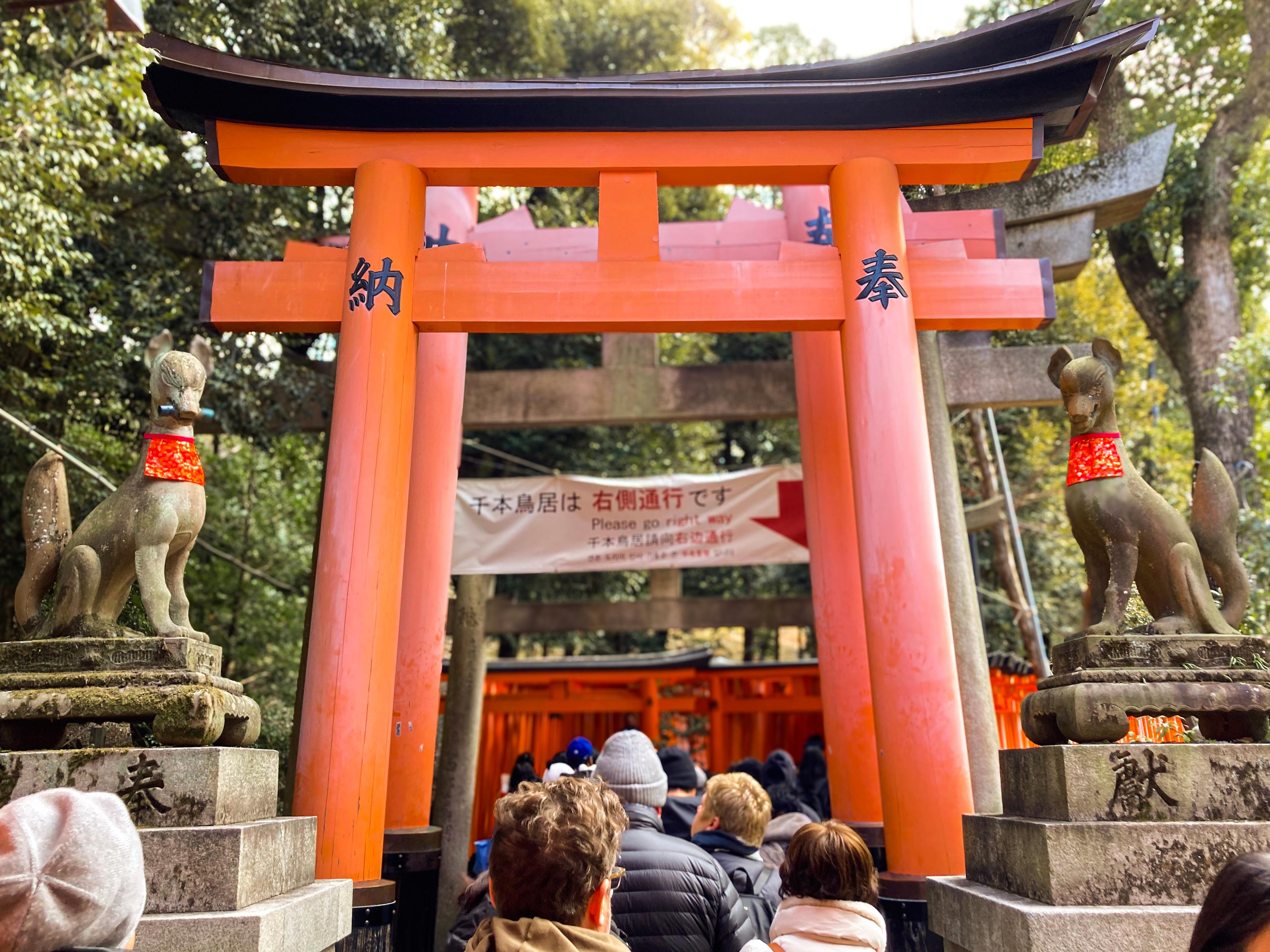
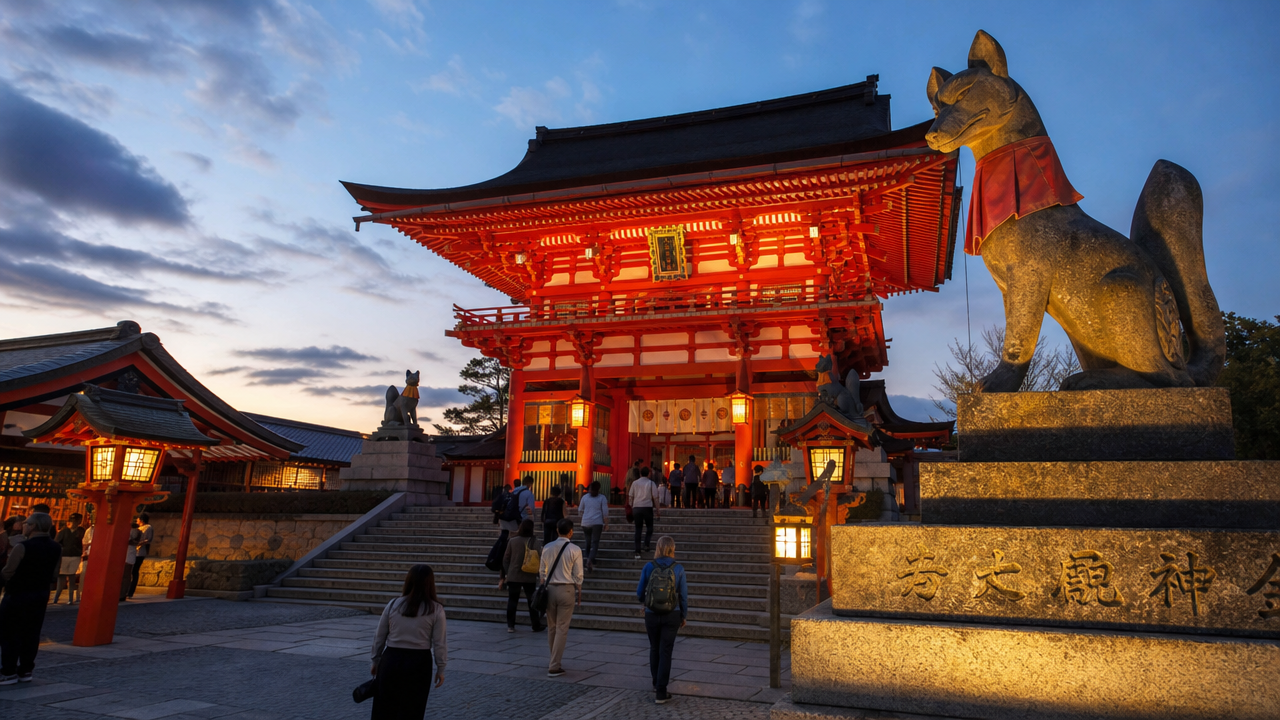
You arrive at the Fushimi Inari main gate as dusk settles over southern Kyoto, the vermilion pillars still visible against the deepening sky. Your guide leads you past the rōmon gate and into the outer courtyard, where stone foxes flank the approach to the main hall.
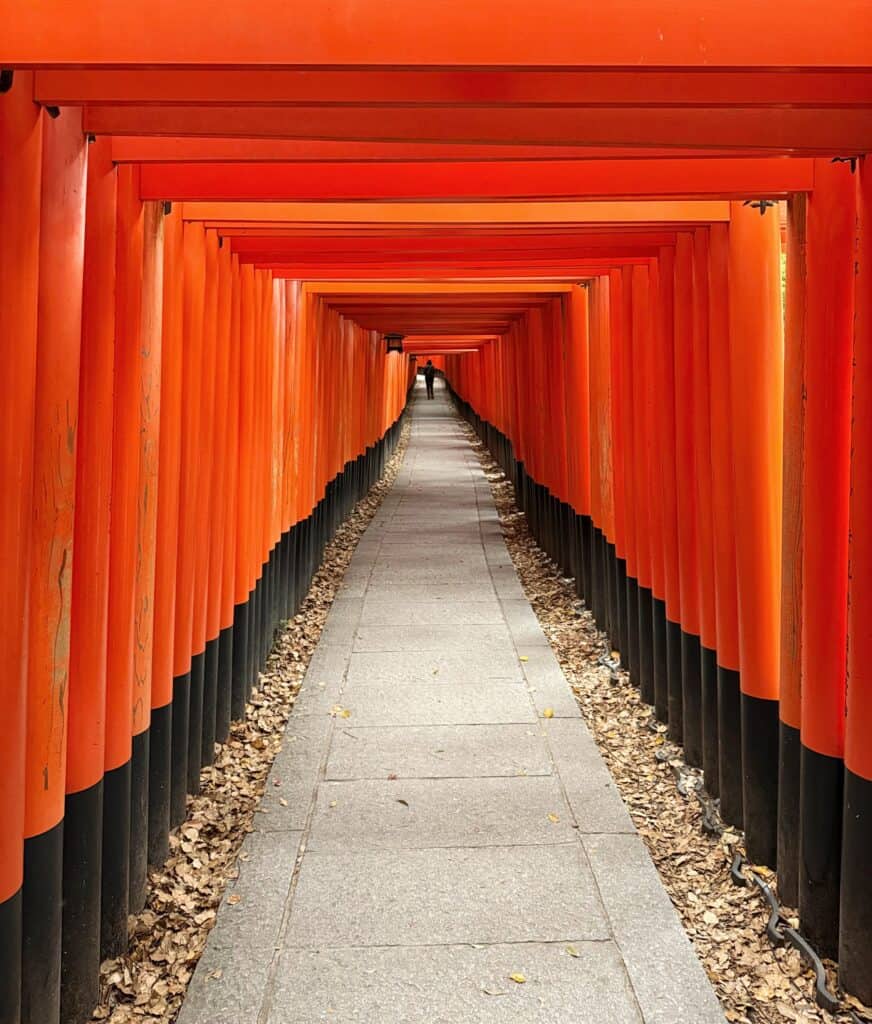
You pause at the temizuya to rinse your hands and mouth, watching the water catch the last daylight before it drains into the basin below. The Senbon Torii begins just beyond: two parallel corridors of gates so closely spaced that they form a tunnel, each crossbeam inscribed with a donor's name in black ink.
You walk through the lower section, where electric lighting casts the vermilion posts in warm relief, then continue upward as the illumination thins and the forest closes in. At the first plateau, you stop at a cluster of smaller shrines where candles flicker inside wooden housings, their flames reflected in polished offering boxes. Your guide explains the fox statues' attributes—one holds a key to the rice granary, another a sacred jewel—and you notice how the carved stone seems to shift expression under moving light. The path narrows as you ascend, the torii gates now irregularly spaced, some leaning slightly after decades on the hillside.
You reach Yotsutsuji intersection after thirty minutes of climbing, stepping out of the tree cover to see Kyoto spread below, its streets a grid of lights extending toward distant mountains. The air is cooler here, and you hear only wind through bamboo and the occasional rustle of unseen movement in the undergrowrowth. Your guide points out the upper trail that continues to the summit, then leads you back down through an alternate path lined with weathered stone lanterns, completing the fushimi inari shrine night visit at the main hall where you began.
Fushimi Inari-taisha Shrine has 0 JPY (Free entry), so there is no cost to enter for your own tour.
The shrine is open 00:00–23:59, allowing you to conduct your fushimi inari night tour at any time.
The lower paths of Fushimi Inari-taisha Shrine are generally safe, but hikers should stay on well-lit paths.
No, Fushimi Inari-taisha Shrine does not require tickets for any visitor.
The best arrival window for a peaceful experience is 05:00–08:00, though night tours are popular for the illuminated gates.
Restrooms are available near the base of Fushimi Inari-taisha Shrine but become scarce on the mountain.
Yes, photography is allowed, and a fushimi inari night tour offers unique lighting for your shots.
The trails are open 24 hours, but be cautious as many sections are not lit during a fushimi inari night tour.
Bring a flashlight, water, and comfortable shoes for your fushimi inari night tour.